Friday, February 6, 2015

January Arts

As Early Childhood artists learn about the Caribbean in their class, they created Molas:  Folk-art from Panama.  They learned about layering, adding details, focusing, and what molas are used for.


Early Childhood artists learned about the different layers of the rain forests in South America and created these rainforest collages.


Early Childhood artists brighten a gloomy day by painting rainbows in the sky.


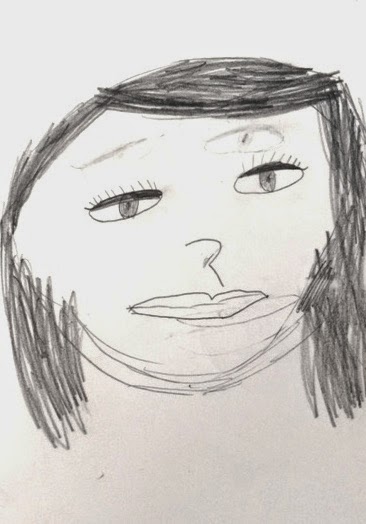
Early Childhood A  artists created self-portraits to contribute to the school-wide collaboration of this years yearbook cover.


Early Childhood B artists learned about the portraits of Frida Kahlo and created their self-portraits inspired by her work.


I'm so proud that all of my Early Childhood musicians returned from their Winter Break remembering their rhythm patterns and our ensemble piece. Their focus has strengthened when each of them are on the melody instrument. It's difficult not to wander to your neighbor's rhythm! They have grown leaps and bounds with creativity and discipline. It's a privilege for me to be in these classes.  -Kari


Lower Elementary performed "A Bed for Bunnies" and "Francis Finds a Friend" for their parents. The students worked really hard on creating all the props used in the plays.  Congratulations to the students for putting on two great productions that emphasized the value of friendship and teamwork. A big thank you to Christy Berryessa for directing and writing the plays!


As Lower Elementary artists get into the fundamental human needs area of their curriculum, they dive into the biomes of North America.  Specifically, with the Native Americans and their needs in the biomes on our continent. Native Americans believe that the night air is filled with dreams both good and bad. The dream catcher when hung over or near their bed swinging freely in the air, catches the dreams as they flow by. The good dreams know how to pass through the dream catcher, slipping through the outer holes and slide down the soft feathers so gently that many times the sleeper does not know that he/she is dreaming. The bad dreams, not knowing the way, get tangled in the dream catcher and perish with the first light of the new day.  The students created their own dream catchers inspired by the Native Americans.


As Lower Elementary students prepare for their introduction into Native American history, they have been experiencing the diverse music and instruments that were, and remain, an important aspect of that culture.  Listening to audio examples and participating in classroom demonstrations of ceramic flutes, rattles, shakers and drums, brings the rich heritage into the classroom.


In Addition, activities that teach music fundamentals is an ongoing way to support past lessons about notes, rhythm and song. Activities such as music math and rhythm telephone, to name a few, assist in teaching note length and note notation. Group singing and circular song exercises support tonal and melody recognition while encouraging individual expression. Overall there is a large amount of learning and discovery going on in the music classes and the students are having a great time!


Middle Elementary students have been working on animal pinch pots in clay, inspired by early sculptures they observed at the Tennessee State Museum and other Ancient American works. 


Middle Elementary artists created these miniature layered landscapes in collage.  


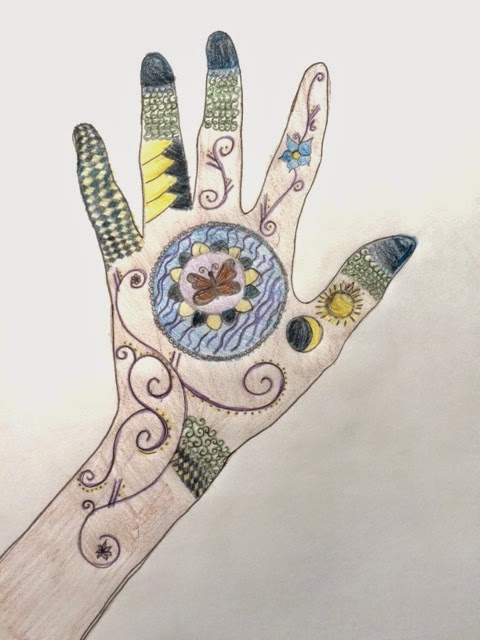
As Upper Elementary learn about different religions in their classroom, they learned about henna tattoos and their significance in art.  The students designed their own tattoos inspired by traditional henna tattoos.


Upper Elementary students learn about the making and use of egg tempera during the Early Renaissance.  They had the opportunity to make egg tempera by removing the yolk from it's sac and mixing it with pigment. 


Upper Elementary also learned about the use of oil paint and its significance during the Late Renaissance.  They experimented with applying the oil paint as well as blending, shading, and highlighting to create realism by painting a still life of fruit.


Middle ElementaryUpper Elementary, and Middle School students visited the Frist to see the exhibition of Sanctity Pictured:  The Art of the Dominican Franciscan Orders in Renaissance Italy.


Upper Elementary and Middle School students saw the Nashville Shakespeare Company perform Twelfth Night.


Thank you to Chris from the Nashville Shakespeare Festival for leading a workshop with our Middle School students to prep them for the performance of Twelfth Night.


Upper Elementary students visited the Country Music Hall of Fame to see String City: Nashville’s Tradition of Music and Puppetry.  This performance is a colorful telling of the history of country music in Nashville. It uses over 80 marionettes, hand puppets, rod puppets, shadow puppets, and more! 


Upper Elementary and Middle School students visited TPAC to see the performance of GOLD. This performance consists of five athletic young men and women that tap, spin, and tumble across the stage, using everyday objects in imaginative ways.


After School Artists created birch trees by putting strips of blue painters tape down on paper and then painting the whole space. They removed the tape revealing the unpainted paper and creating the trees. They added the birch texture with the edge of corrugated cardboard. 


Aftercare artists learned about the grid method of Chuck Close's portraits.  They created this collaboration piece of Martin Luther King using that grid method. 


The yearbook staff completed the cover of the yearbook using self-portraits created by all the students at Abintra.

Wednesday, December 10, 2014

November 2014

As Early Childhood artists talked about autumn and leaves, they also learned about nature artist Andy Goldsworthy.  They explored Abintra's campus and picked up fallen leaves to create their own nature sculptures. 


To integrate their classroom study of Africa, Early Childhood artists learn about African patterns. They are creating beads out of patterns they created.


Early Childhood A artists also pin-punched animals and trees from Africa and painted a landscape to put them on. 


Early Childhood practiced rhythm and movement using hoops during Musikgarten. 


Lower Elementary artists ended their lessons on the elements of design with "texture.”  In an effort to reference  their classroom study of land and water forms as well as to explore texture, they created encaustic (beeswax)  paintings.  LE parent, Matt Slocum, donated blocks of beeswax from his bee farm for the students to melt and mix with pigment.  The students were fascinated by the hot wax drying immediately after they brushed it on their board.  They enjoyed scraping and cutting into the wax to reveal the layers of color and to created texture.


Lower Elementary students are learning the time value and names of notes and rests on a music staff and applying that knowledge to sight reading musical notation. Note and symbol recognition has moved along very quickly!  They sing songs that support classroom topics including the names of all the states in alphabetical order and stories read in the classroom.There is also singing of tongue twisters and a few classics.  A variety of instruments are brought in, such as a flute, and passed around and discussed. Then there is a demonstration as well as listening to examples of that instrument. Exploring music through movement and with percussion instruments is always a hit and really gets the motor skills working. There is so much discovery and learning going on already, it is a very exciting time in the LE music class!


Did you know that your eyes are in the middle of your head and that the width of your eye is the same width of the space between your eyes?  Lower Elementary students enjoyed learning these facts and more when given a lesson on drawing portraits.


Middle Elementary's pastel self portraits are part of a series of studies on proportion and observation. Students have diagrammed faces divided into halves and quarters to show the location of the features, and have done self portraits in pencil while observing their own features in a mirror. 


Congratulations to Upper Elementary on a wonderful production of "Coyote Tales!" The students worked on everything from props to costumes to stage management these past two weeks. Thank you to their director, Abintra alumni Christy Berryessa, for working so hard with the students! 


Middle Elementary and Upper Elementary students visited the Nashville Children's Theater to see the production of, James and the Giant Peach


Middle School students finished up their self-portraits inspired by local artist, Wayne Brezinka


Digital Art students explored the Abintra campus and captured these beautiful photos while learning about depth of field in photography.


Photo by Mikayla


Monday, November 10, 2014

October 2014

ART
Early Childhood artists had their first lesson with our artist in residence guide, Sarah. To celebrate Picasso's birthday and to integrate their classroom study of diversity, they created artwork inspired by Picasso's "Flowers in Hand."


Early Childhood A artists are studying South America. They created this three-dimensional model of the Chilean national flower.


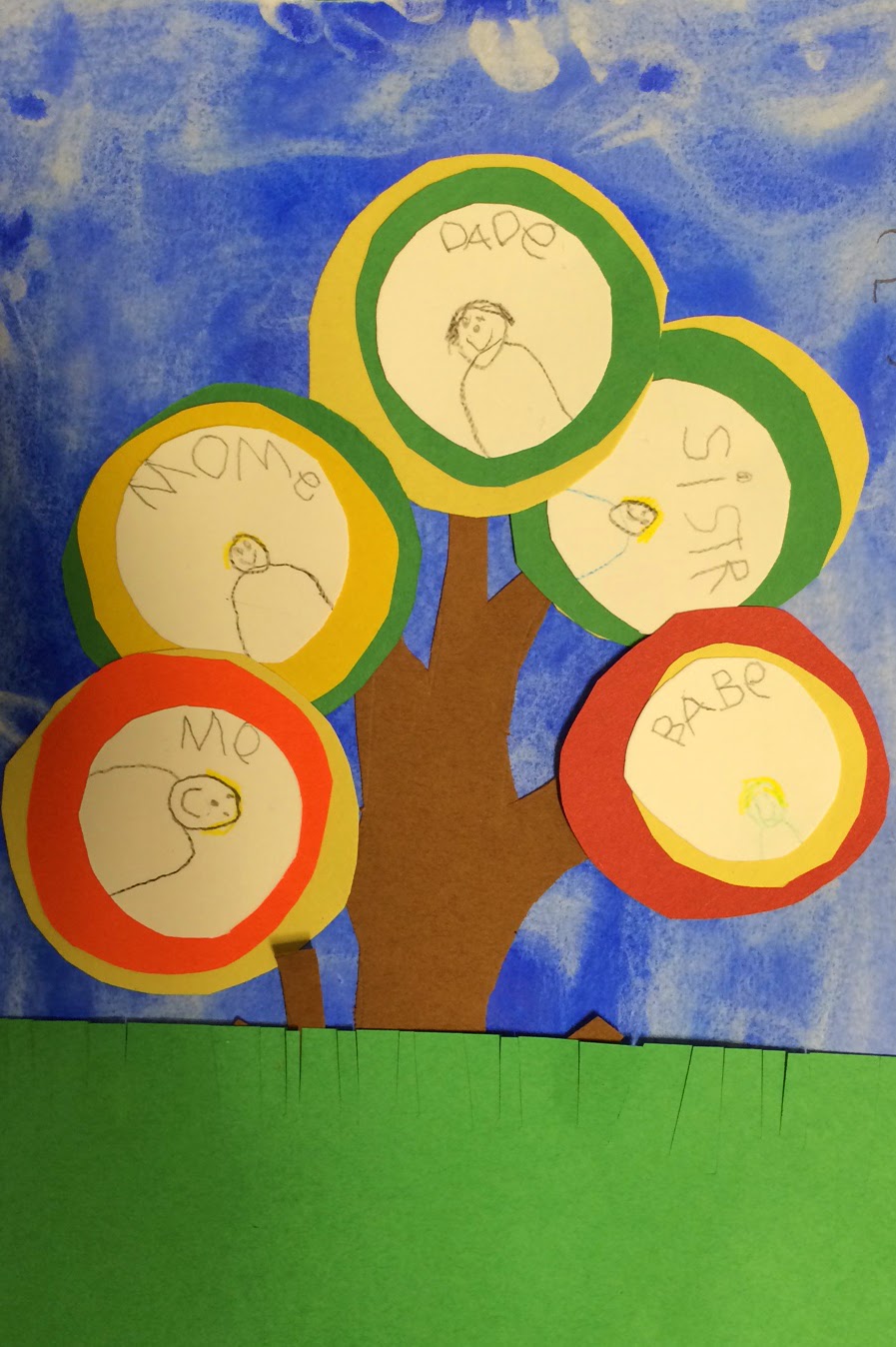
Early Childhood B artists learned about artist Wassily Kandinsky and created family trees 
inspired by his work.  Kandinsky's work is currently exhibited at the Frist.  
Please take your little ones to see his work in person!


Lower Elementary artists explored the element of design and form by making 3D circles inspired by Wassily Kandinsky.  To integrate their classroom study of the solar system, 
they each created their circle as a planet.  


Lower Elementary artists also explore the element of design and space through several projects.  To integrate their classroom study of the Great Lesson, The Coming of Life, they created drawings illustrating the beginning of life forms focusing on proportions and composition to fill the space.


 To integrate their classroom study of leaves, Lower Elementary artists created artwork again 
focusing on positive and negative space.


To prepare for the Kandinsky exhibit, Middle Elementary artists experimented with some of the elements of design.  Equipped with rulers and old CD's, students followed somewhat open-ended instructions like "draw three parts of a circle" or "make a line that turns a corner 5 times".  They completed their complex drawings with colored pencil and watercolor.


Middle Elementary artist have also had a variety of practice with drawing this Fall including drawing the human figure from life. They worked quickly with pastel on colored paper, using the side of the pastel to capture the model's movement with a few broad strokes.


Upper Elementary artists have been working on both realistic and abstract self portraits.  For the realistic self portraits, they studied the work and technique of Chuck Close.  Close is know for his large-scale realistic drawings created through a grid system.  The students are working on a portrait of themselves using this grid system.  For the abstract portraits, Upper Elementary artists studied the portraits of Pablo Picasso, and created a self-portrait that illustrates who they see themselves as vs. what the world sees them as through a realistic portrait.  


Middle School artists are currently working on self-portraits influence by local artist Wayne Brezinka.  In preparation for these portraits, they have been practicing the basics of portraiture: drawing eyes, noses, lips, ears - and, with the assistance of mirrors, drawing self-portraits.


MS students had the wonderful opportunity to visit Brezinka at his studio to learn more about his art and his process.  Brezinka is famous for his portrait of Abe Lincoln which will hang in the Ford Theater for a year. Here is a kind note about their visit:


"I had some visitors in my studio yesterday afternoon from  Abintra Montessori School  here in Nashville.  A group of very bright, eager and creative individuals learning about portrait collage in their art class stopped by my studio yesterday afternoon. They were interested in learning more about my process and wanted to see my behind the scenes mess in person!    Thank you to Missy Wood and John Toomey for reaching out and making this happen.  I look forward to seeing the kids portrait collage work in early December."


ME, UE, and MS all visited the Frist to see the exhibit Kandinsky: A Retrospective.


Aftercare artists created these shape paintings inspired by the work of Kandinsky.


Aftercare artists explored painting with resists by drawing with a bottle of glue mixed with black paint.  After the glue dried, they then painted the drawings with watercolor.


Aftercare artists learned how to create movement in art by creating colorful, diagonal lines, cutting them into strips, and then gluing them down in a way that made the lines look like they are moving.


Digital Art students assisted Missy in taking all the student photos this year.  They have been editing, organizing, and loading the photos on a website for easy viewing and ordering. The photos will be available to the parents very soon!


MUSIC

EC friends have the opportunity to experience a music and movement program with artist in residence Kari. Each of her classes are structured with traveling movement so the children are able to feel the difference between a duple meter and a triple meter, stationary movement such as "the stick passing game" where they develop ensemble activity and a sense of community with music, plus ear training with tonal and rhythm patterns. The instruments are mainly percussion at this level, with some use of tonal bars.  There are many things being taught in these classes that are an integral part of developing true musicianship. Impulse control, crossing both the horizontal and vertical mid lines through movement for brain development, and developing a greater sense of spacial awareness through the use of hoops and scarves, are just a few examples of activities used in these classes. Kari is introducing a wonderful foundation for children to build and develop their love of music.


Friends in the LE classroom began an introduction to music class with artist in residence Duncan.  In the classroom, he brings percussion instruments and his acoustic guitar. The classes not only focus on the basic elements of music such as rhythm, melody, dynamics, and pitch, but there is also a lot of singing. The class sings a variety of songs that support classroom activity, as well as encourage each student to be creative. Not every student has the same exposure to music and few have experienced the vocabulary or language of music. The ear training, rhythm exercises, note recognition, and group discussions emphasize the basic foundation some students may already have while introducing these concepts to those students who have not yet been exposed to music theory and chorus. Duncan is bringing music and singing into the classroom and is combining learning and fun.